Ram (male)
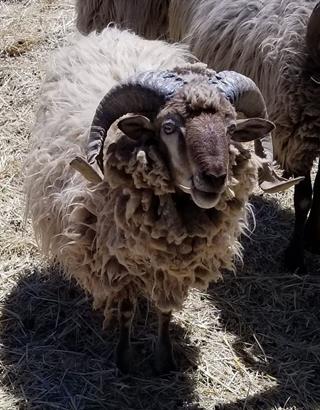
Chief is a good-natured boy with majestic balanced horns!
Not for Sale
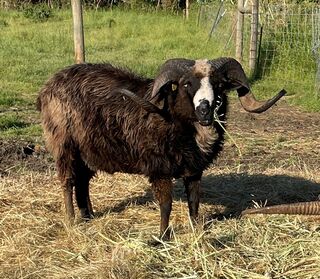
Dam: TB Q-Tip
I got Boromir because I wussed out on selling Hosanna and Sierra. Now we have two separate bloodlines and we will have the opportunity (depending on the genders of births) to sell breeding pairs/starter flocks! Navajo-Churros were first brought to the New World by Spanish conquistadors, making them the first sheep here. Over time, multiple native American tribes raided and traded for them, but the Navajos made the most use of them. They were nearly eradicated by the U.S. government in an attempt to subdue the Navajos, but some surviving sheep hid among the southwestern canyons. Some were also brought west during the Gold Rush. During the Great Depression, one third of all livestock were slaughtered by the U.S. government, nearly eradicating the breed again. It wasn't until the 1970s that some of the sheep scattered in the southwest canyons were developed into the Navajo-Churros we raise today. If you ever wondered why they can be flighty, I believe that is the answer: they're descended from two hundred years of sheep that survived by hiding in canyons.
Not for Sale
Ewe (female)
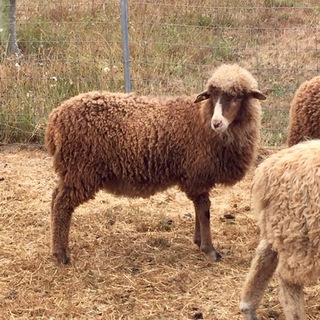
Beautiful girl whose breed has a rich history. On July 3rd 2023, Bonita surprised us with a massive ram lamb -- the apparent product of a one-night stand when our Leicester Longwool ram broke out briefly in February. I am impressed with her mothering skills. This lamb was 15 pounds at four days old. She has retained her weight and produces loads of milk. She birthed him without a single issue and she is protective of him toward other sheep. She has also mellowed out somewhat and was the best behaved sheep at shearing!
Not for Sale
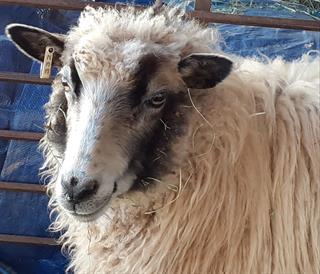
Hazel has been a wonderful mother to her first lamb Hosanna!
Not for Sale
Ewe Lamb (female)
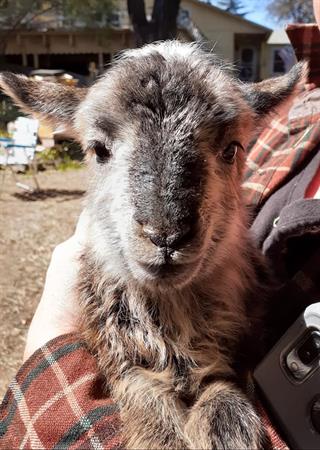
Dam: WDR Hazelnut
Hosanna is a single polled ewe lamb out of Chief and Hazel. She is full sister to twins SHF Sierra and SHF Shilah. She was born grey-and-tan, but she seems to have turned... silver? Hosey is an escape artist. She can squeeze through a six-inch opening like a cat! She does this so often that it's routine for me to open the sheep gate and let her run by me to go back in. She always has been adventurous and active. She still has those tendencies in addition to the skittish Navajo-Churro genes. Navajo-Churros were first brought to the New World by Spanish conquistadors, making them the first sheep here. Over time, multiple native American tribes raided and traded for them, but the Navajos made the most use of them. They were nearly eradicated by the U.S. government in an attempt to subdue the Navajos, but some surviving sheep hid among the southwestern canyons. Some were also brought west during the Gold Rush. During the Great Depression, one third of all livestock were slaughtered by the U.S. government, nearly eradicating the breed again. It wasn't until the 1970s that some of the sheep scattered in the southwest canyons were developed into the Navajo-Churros we raise today. If you ever wondered why they can be flighty, I believe that is the answer: they're descended from two hundred years of sheep that survived by hiding in canyons. While I try to give ours Navajo and Spanish names to honor their heritage, Hosanna was born on Palm Sunday, so I decided to honor that with her name.
Not for Sale
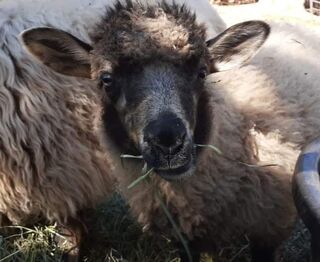
Dam: WDR Hazelnut
Beautiful polled twin badgerface ewe out of Chief and Hazel! Full sister to SHF Hosanna and her twin SHF Shilah. Navajo-Churros were first brought to the New World by Spanish conquistadors, making them the first sheep here. Over time, multiple native American tribes raided and traded for them, but the Navajos made the most use of them. They were nearly eradicated by the U.S. government in an attempt to subdue the Navajos, but some surviving sheep hid among the southwestern canyons. Some were also brought west during the Gold Rush. During the Great Depression, one third of all livestock were slaughtered by the U.S. government, nearly eradicating the breed again. It wasn't until the 1970s that some of the sheep scattered in the southwest canyons were developed into the Navajo-Churros we raise today. If you ever wondered why they can be flighty, I believe that is the answer: they're descended from two hundred years of sheep that survived by hiding in canyons. I try to use Spanish and Navajo names to honor their heritage. Sierra is Spanish for "mountain." Sierra is the only lamb that reluctantly lets me touch her a little while she eats. She poses for the camera and loves to show off how pretty she is!
Not for Sale
Deceased
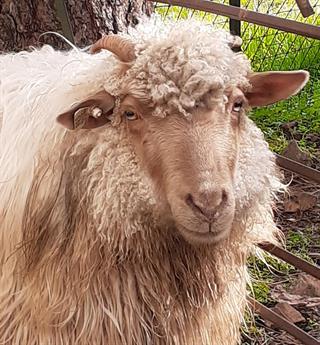
A sweet apricot color. Unfortunately, we lost Eloise to an untreatable intestinal cancer.
Deceased
Featured Items